

SekaHomeFinds: practical kitchen storage tips to save space and reduce daily clutter. A well-organized kitchen makes cooking faster, cleaning simpler, and daily life calmer. These tips focus on smart systems you can adopt this week — no major renovations required.
Start small: choose one zone (pantry, drawers, or countertops) and apply a few targeted strategies. If you want ready-made solutions, check product-focused organizers and modular pieces in our Kitchen storage collection to match your layout and budget.
1. Establish zones and purge regularly
Organize by activity: prep, cooking, baking, storage, and cleanup. A clear zone map prevents duplicate items and reduces countertop clutter. Set a quarterly declutter session: toss expired foods, donate duplicates, and consolidate specialty tools.
Keep only the tools you use weekly within easy reach; store occasional-use items elsewhere. For quick sorting and small-item containment, browse compact drawer inserts and gadget organizers in the Tools & Gadgets category — the right tool makes habits stick.
2. Optimize drawers for utensils and tools
Drawers should be curated. Use adjustable dividers, tiered trays, and vertical slots so knives, spatulas, and measuring spoons each have a home. Frequently used utensils belong nearest the prep area; less-used items can be stored deeper or in a secondary drawer.
If you’re replacing cutlery or setting up a new drawer system, consider flatware and drawer-friendly sets to standardize sizes and simplify organization. You can find options in our Flatware selection that fit common organizer layouts and keep drawers tidy.
3. Stack and stagger cookware smartly
Pots and pans consume a lot of cabinet space if nested poorly. Use pan racks or vertical dividers so lids and pans are accessible without unstacking the whole set. Consider hanging a few frequently used pans to free lower cabinet room.
For those building a functional set or replacing bulky pieces, check durable, stackable options in our Cookware category — choosing the right shapes and sizes reduces wasted cabinet real estate.
4. Rethink pantry and food container strategy
Uniform, stackable containers save the most space in pantries. Transfer dry goods into clear, airtight containers and label them. Use risers and shelf inserts to create levels so everything is visible at a glance.
If you prefer glass for longevity and microwave/oven safety, the 20-piece set of locking-lid containers is a great starter — they stack well and make portioning, freezing, and reheating seamless. See the Amazon Basics Glass Locking Lids Food Storage Containers for a compact, reliable option.
5. Tame small appliances without hiding them
Small appliances are often responsible for countertop clutter. Adopt an “appliance home” — a designated cabinet or an appliance garage that stores mixers, blenders, and toasters when not in use. Consider pull-out shelves or roll-out trays for easy access without lifting heavy items.
When choosing replacements, prioritize compact, stackable, or multi-function appliances. Browse space-efficient options in our Appliances collection to pick pieces designed for smaller kitchens.
6. Make under-sink and waste areas work harder
Under-sink space can be optimized with tiered shelving, pull-out bins, and tension rods for spray bottles. Keep cleaning supplies grouped and label shelves to avoid wasteful overbuying.
Locate trash, recycling, and compost containers where they’re most used—near prep or sink—and choose slim, hands-free models to reduce odors and mess. We carry practical options in the Trash Cans category that fit tight spaces and streamline daily disposal.
7. Blend function with style
Storage shouldn’t be purely utilitarian. Use attractive jars, open shelving with baskets, and matching containers to make the kitchen inviting while maintaining order. Decorative trays corral oils and frequently used condiments, making cleanup fast.
Combine practical storage pieces with curated accents from our Kitchen Decor selection to create a cohesive look that encourages you to keep surfaces tidy.
Checklist: quick wins to implement this weekend
- Clear one drawer and add dividers for utensils.
- Transfer bulk dry goods into stackable, labeled containers.
- Designate a cabinet or shelf for small appliances; store cords together.
- Install a lid organizer or vertical pan divider in a deep cabinet.
- Place a slim trash/recycling unit near prep or sink area.
- Adopt a 5–10 minute nightly tidy routine to wipe counters and return items to zones.
FAQ
- How do I start organizing if my kitchen is very cluttered?
Begin with one 30–60 minute zone: clear it, sort items into keep/donate/trash, and return only essentials. Repeat weekly until complete. - Are clear containers really worth it?
Yes—transparent containers improve visibility, reduce wasted food, and stack more predictably than mismatched packaging. - What’s the best way to store lids?
Use vertical dividers, a lid rack, or a shallow bin mounted on the inside of a cabinet door to avoid loose lid piles. - How can I free up countertop space without sacrificing convenience?
Give everyday items a set home: wall rails for utensils, a small caddy for oils on a tray, and a concealed appliance cabinet or cart for occasional devices. - How often should I re-evaluate my kitchen layout?
Reassess seasonally or when your cooking habits change. Minor adjustments prevent major clutter buildup.
Practical takeaway: commit to one small change today — clear a single drawer or swap mismatched containers for stackable storage. Small wins compound quickly, and consistent zones keep daily clutter under control.
Products Featured in This Article
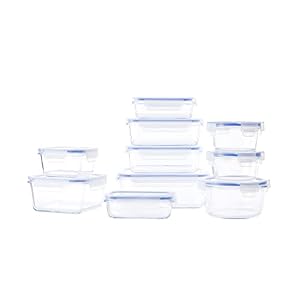
Amazon Basics Glass Locking Lids Fo…
Make sure this fits by entering your model number. 20-piece set includes 10 borosilicate glass bases…