RiderInstinct Editorial Team
Why this guide matters and how to use it
Riders face two common charging challenges: keeping the starter battery healthy during storage or infrequent use, and providing reliable power on the bike for phones, heated gear, navigation and accessories. This guide explains the decision framework so you choose a solution that matches your motorcycle, battery chemistry and riding style.
Start by reading the first third to learn the principles (battery types, alternator limits, safety). The middle sections break down the specific solution types and trade‑offs. The final sections cover installation, troubleshooting and a practical checklist so you can act safely and confidently.
Basic battery and charging principles every rider should understand
Before picking chargers or outlets, understand the constraints that determine what will work on your bike.
- Battery chemistry matters: Lead‑acid (flooded, AGM, gel) and lithium variants (including LiFePO4) have different charging voltages and tolerances. Using the wrong charger or charging profile risks reducing life or damaging the battery.
- Alternator capacity is finite: Your bike’s stator/alternator produces a limited amount of electrical power. Accessories and charging loads draw from that budget while the engine is running. Overloading leads to dimming lights, overheated regulators, or a drained battery at idle.
- Smart charging vs trickle charging: Smart chargers/maintainers monitor battery condition and switch to a float or maintenance mode. Simple trickle chargers supply a constant small current and risk overcharging certain chemistries if left indefinitely.
- Safety and fusing: Every added circuit must be fused at an appropriate value near the battery. Wiring gauge must match the current draw and circuit length to avoid voltage drop and heat.
When exact values are safety‑critical (charging voltage, alternator output, fuse sizing), verify the motorcycle owner’s manual and the battery manufacturer’s documentation rather than relying on generic rules of thumb.
Major types of charging solutions and when to use them
There are several common categories of charging solutions used by riders. Each has practical trade‑offs.
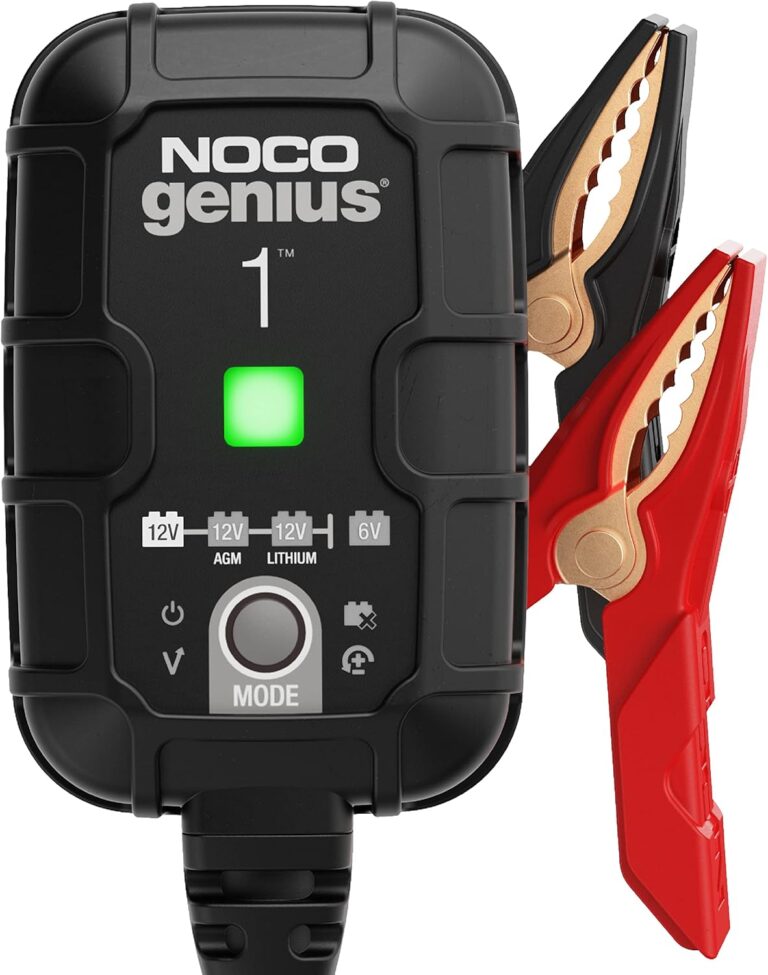
- Smart battery maintainers/chargers (off‑bike): Designed for storage and long‑term maintenance. They connect to the battery when the bike is parked and slowly bring it to full charge then hold it. Best for winter storage or infrequent use.
- Onboard USB/12V power ports: Provide power while riding for phones, GPS, heated gear. They’re convenient but limited by the bike’s available output and often require waterproofing and proper fusing.
- Onboard DC‑DC converters / voltage regulators: Useful when installing accessories on bikes with sensitive charging systems (common on some modern motorcycles) or when using lithium batteries that need a stable charge profile. They convert or regulate alternator output for consistent charging of accessories or the house battery.
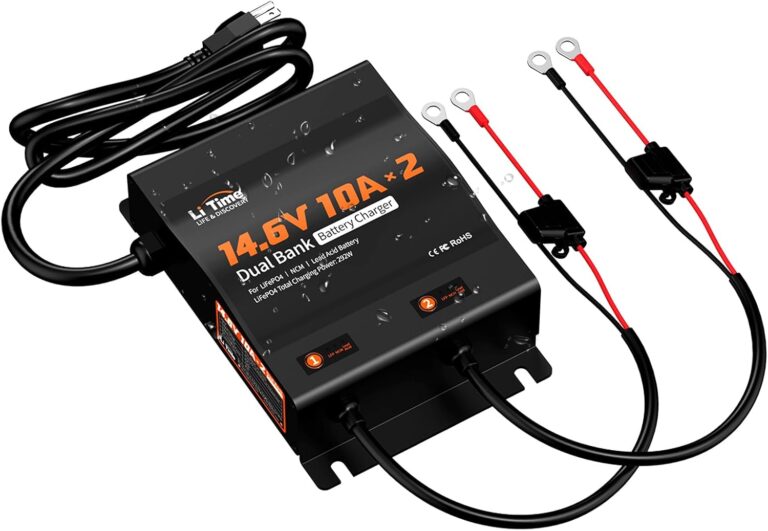
- Onboard dedicated chargers for lithium batteries: Some riders install compact chargers designed specifically for LiFePO4 batteries; these must be compatible with the battery’s BMS and voltage requirements.
- Portable jump starters / power packs: Provide a high current boost for starting a dead battery and often include USB ports for devices. They’re a good safety net but not a replacement for proper charging and battery care.
Choosing among these depends on whether your priority is long‑term battery health, on‑the‑road device charging, or supporting heavy accessory loads while riding.
Match charging solutions to riding style and needs
Different riders have different priorities. Here’s how to think about the match.
- Commuters and urban riders: A dedicated, fused USB or USB‑C PD port is usually sufficient for phone navigation and charging. Keep wiring tidy and ensure connectors are waterproof or stowed when parked.
- Touring and long‑distance riders: You’ll want robust on‑bike power for multiple devices and possibly a way to maintain a second battery or heated gear. Consider higher‑output USB‑C PD ports and verify alternator capacity to avoid overload. A portable smart maintainer for overnight stops can protect the battery if you run devices while stopped for long periods.
- Adventure/off‑road riders: Rugged, waterproof sockets with quick‑disconnects and recessed mounts reduce snagging and water ingress. Check mounting locations and cable routing to avoid chafing and to keep connections away from mud and salt.
- Winter or infrequent riders: A smart battery maintainer is the most important tool — it avoids deep discharge and sulfation in lead‑acid batteries, and preserves charge in lithium packs. Use a charger compatible with your battery chemistry.
For a deeper decision flow that helps pick a specific product type by riding style, see our internal guide: How to Choose the Right Charging Solutions for Your Riding Style.
Installation and wiring basics every rider must follow
Even a simple USB port can become a hazard if poorly installed. Follow these practical rules:
- Locate fuses at the battery: Always place a fuse or circuit breaker as close to the battery positive terminal as possible to protect the entire length of wiring. Choose the correct fuse rating for the device — if unsure, calculate expected current draw and add a safety margin, then verify against manufacturer guidance.
- Use the right wire gauge: Longer runs and higher currents need thicker wire. Undersized wire heats up and causes voltage drop. If you’re not comfortable calculating wire gauge, consult a professional or the wiring tables in motorcycle electrical handbooks.
- Prefer crimped terminals with quality heat‑shrink: Properly crimped connectors enclosed in heat‑shrink or sealed boots are more durable than bare solder joints exposed to vibration. When soldering is used, secure the cable mechanically (strain relief) so vibration doesn’t fracture the joint.
- Waterproof connectors and mounting: Use IP65/IP67 rated sockets where exposure is likely, and mount connectors so water pools don’t gather near exposed plugs. Recessed mounting and protective caps extend connector life.
- Maintain a clean ground: A reliable negative connection is as important as the positive. Use an existing engine grounding point or the battery negative terminal; clean paint and corrosion before attaching.
When in doubt, consult the motorcycle wiring diagram in the service manual or have a qualified technician install complex systems.
Charging while riding: what’s safe and what’s risky
Many riders assume the alternator will comfortably power whatever they add. That’s not always true.
- Idle and low RPM limits: Alternator output varies with engine RPM. At idle or low revs some bikes produce little spare power, so charging multiple devices or heating gear at stoplights can drain the battery rather than sustain it.
- Know your alternator budget: Check your motorcycle manual for alternator output and subtract factory loads (headlight, ignition, EFI pumps). The remainder is what you can safely allocate to accessories. If the manual doesn’t list precise numbers, contact the manufacturer or a dealer.
- Use efficient devices: USB‑C PD chargers can deliver power more efficiently than older USB designs. Also consider powering accessories only when needed — use on/off switches or controllers for heated gear and lights.
- Monitor voltage: A small voltmeter or a USB charger with a built‑in voltmeter lets you watch system voltage; sustained low readings under load indicate you’re exceeding available output and risking battery drain.
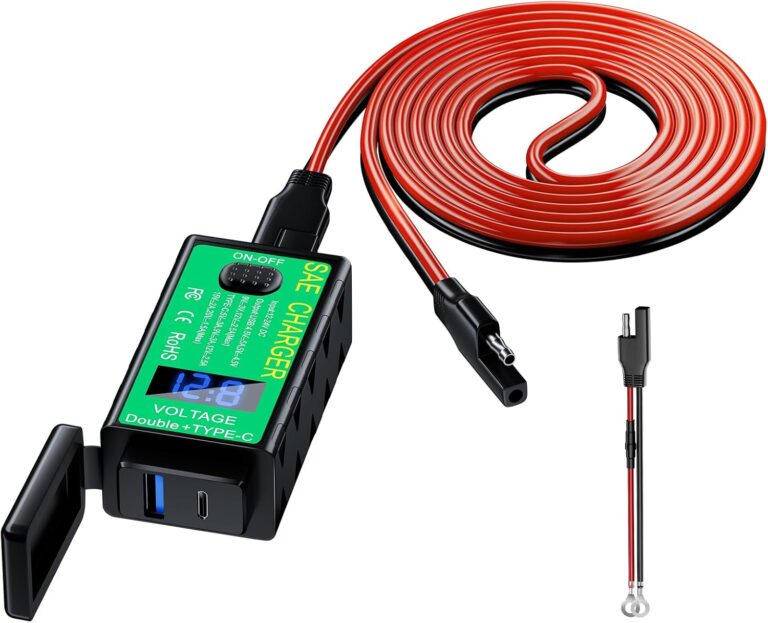
For USB charging devices that include a voltmeter and on/off switch, see product options such as the EXTRACTME USB charger with voltmeter and switch, and compare other multi‑port sockets in our reviews.
Lithium (LiFePO4 and other Li) batteries: special considerations
More riders are switching to lithium starter batteries for weight and performance gains, but lithium introduces specific charging requirements.
- Use compatible chargers: Lithium cells need charge profiles that differ from lead‑acid. Some onboard alternators and charge regulators are tuned for lead‑acid and may not fully charge — or may overheat — a lithium battery without the correct converter or charger.
- BMS interactions: Many lithium packs include a Battery Management System (BMS). The BMS can disconnect the battery at low voltage; some chargers designed for lead‑acid won’t wake a deeply discharged lithium pack. Verify the charger’s 0V activation capability if rescue charging is needed.
- Consider purpose‑built onboard chargers: For lithium use, an onboard charger designed for LiFePO4 can be the safest approach. Our product list includes LiFePO4 onboard chargers — review the manufacturer’s compatibility notes before buying (for example, check the LiTime LiFePO4 onboard charger options).
Always confirm the battery manufacturer’s recommended charging voltages and maximum charge currents. If that data isn’t in the manual, ask the battery maker or your supplier before connecting any charger.
Useful accessories and connector standards (USB, SAE, Anderson, etc.)
Knowing connector types helps you plan quick‑disconnects and accessory swaps.
- SAE quick‑disconnect: A common standard for maintenance and charging leads; it provides a simple two‑wire connection for maintainers and device power.
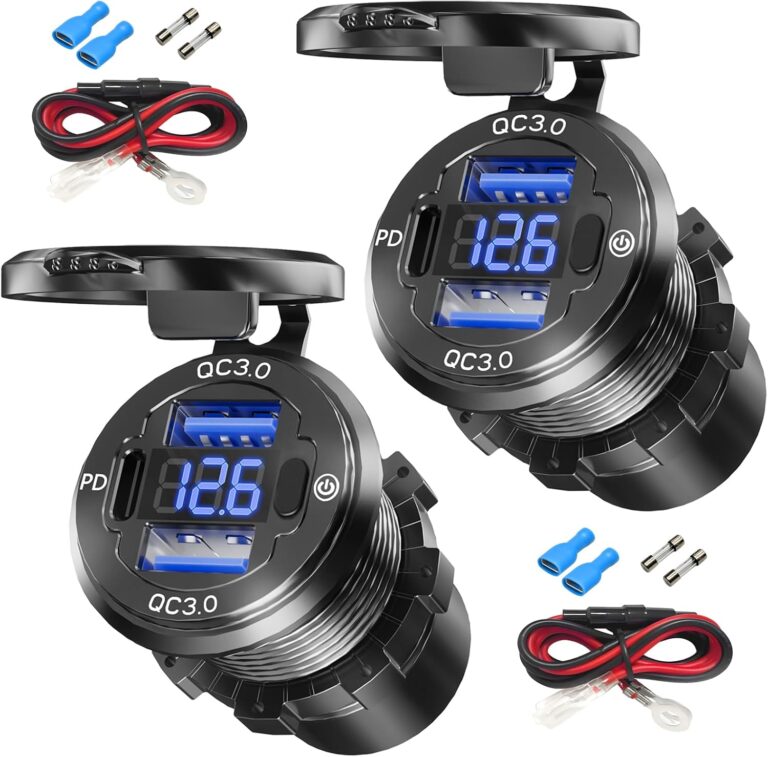
- USB‑A, USB‑C, QC and PD: USB‑A is older and lower power than USB‑C. Quick Charge (QC) 3.0 and USB‑C Power Delivery (PD) enable higher currents and faster charging for modern phones and devices. If you rely on fast charging, choose ports that support the protocols your devices use (see our multi‑port reviews and PD socket reviews).
- Anderson and XT60/XT30: Heavier connectors used for higher current links (accessory batteries, jump packs) where low resistance is needed.
- Protective caps and recessed mounts: Caps keep dirt and water out when sockets aren’t used; recessed mounts reduce accidental snags.
For examples of multi‑port sockets and USB chargers we’ve reviewed, see our Motorcycle USB Charger 3‑in‑1 review and the VANONE Dual PD & QC3.0 socket review.
Common charging problems and step‑by‑step troubleshooting
Here are practical checks when charging issues appear:
- Device won’t charge while riding: Check the fuse at the battery, verify the wiring is solid and measure system voltage at the connector with the engine running. If voltage drops under load, you may be over capacity.
- Battery drains overnight: Look for parasitic drains — alarm systems, aftermarket accessories, or a faulty charging system. A smart maintainer can help keep the battery healthy between rides, but first identify the drain source.
- Charger says error or won’t start: For lithium batteries, some chargers won’t wake a deeply discharged pack. Consult the charger’s manual for 0V activation capability and the battery’s BMS for recovery procedures.
- Fuse blows repeatedly: That indicates a short or too high an inrush current for the fuse rating. Reinspect wiring for chafing or incorrect connections before replacing the fuse with a higher rating — do not oversize fuses to mask faults.
If problems persist, collect voltmeter readings at rest and under load, document fuse sizes and wiring runs, and consult a qualified motorcycle electrician or dealer for diagnosis.
Practical checklist before you add any charging solution
Use this checklist before fitting any charger or power socket:
- Read the motorcycle owner’s manual for alternator output and wiring diagrams.
- Confirm battery chemistry and the battery maker’s recommended charging profile.
- Decide the maximum accessory draw you need while riding and compare it to alternator spare capacity.
- Select and locate a fused feed near the battery with correct wire gauge for the expected current.
- Choose waterproof and robust connectors suitable for your riding environment.
- Install a switch or remote cutoff for accessories that are not needed continuously.
- Test system voltage with the engine at various RPMs and under accessory load before long trips.
Follow this checklist to reduce the chance of unexpected battery problems on the road.